Fire Performers, Aerialists, and Specialty Acts: A Booking Guide
Specialty entertainment is the part of an event guests talk about for years. It is also the part with the most moving pieces behind the scenes. Fire performance needs permits and clearances. Aerial arts need certified rigging and honest ceiling heights. Even a stilt walker needs a floor plan that accounts for doorways and crowd flow.
Handle it in the right order and none of this becomes a problem. Book the right professional and every one of these requirements gets handled for you. Book the wrong one and you find out at 6 p.m. on event day that the fire marshal never approved anything.
This guide covers what event hosts actually need to know: the types of acts, the safety and insurance layer, space requirements, realistic pricing, and how to tell a professional from a hobbyist with a costume.
Types of Specialty Acts
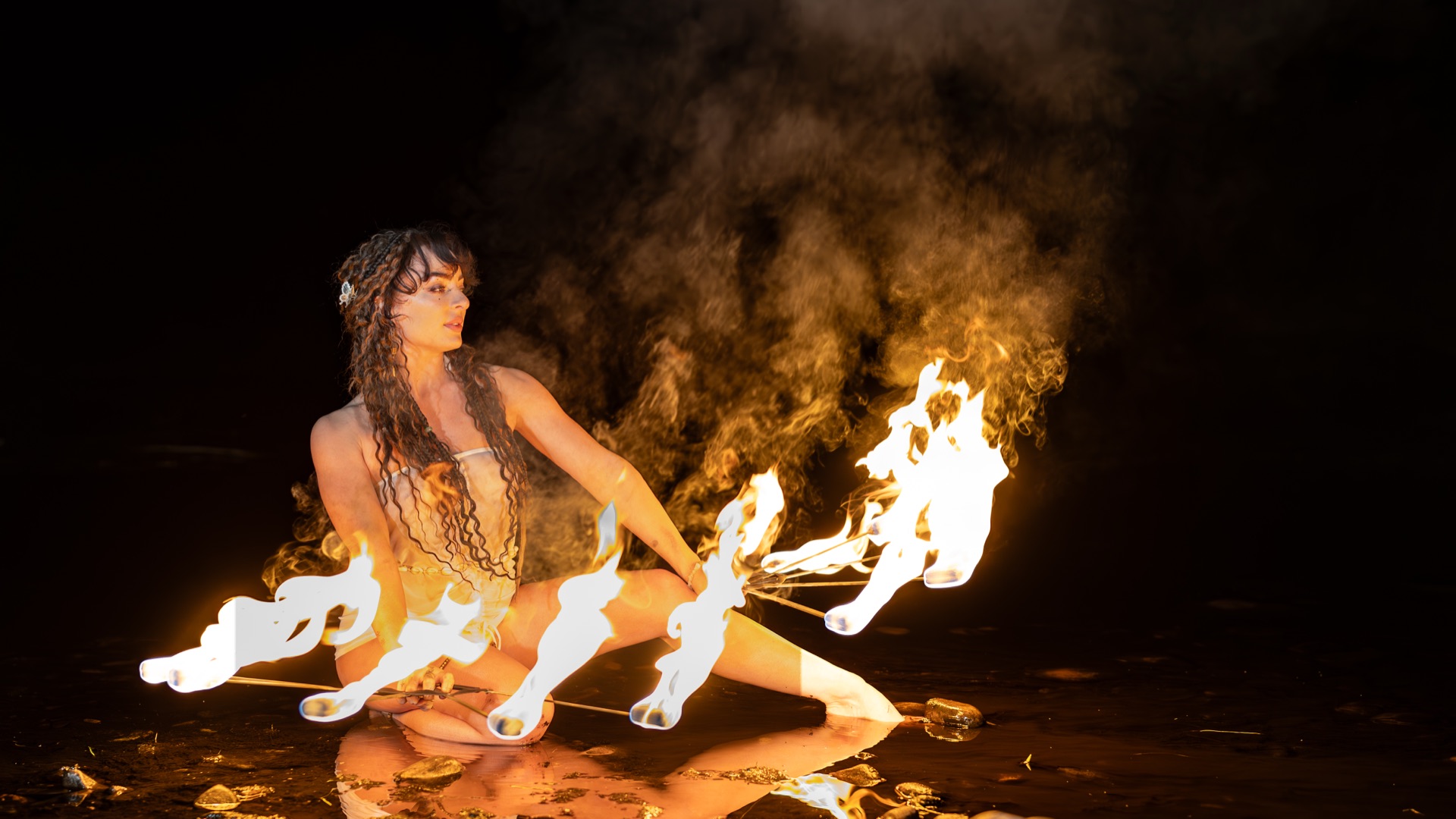
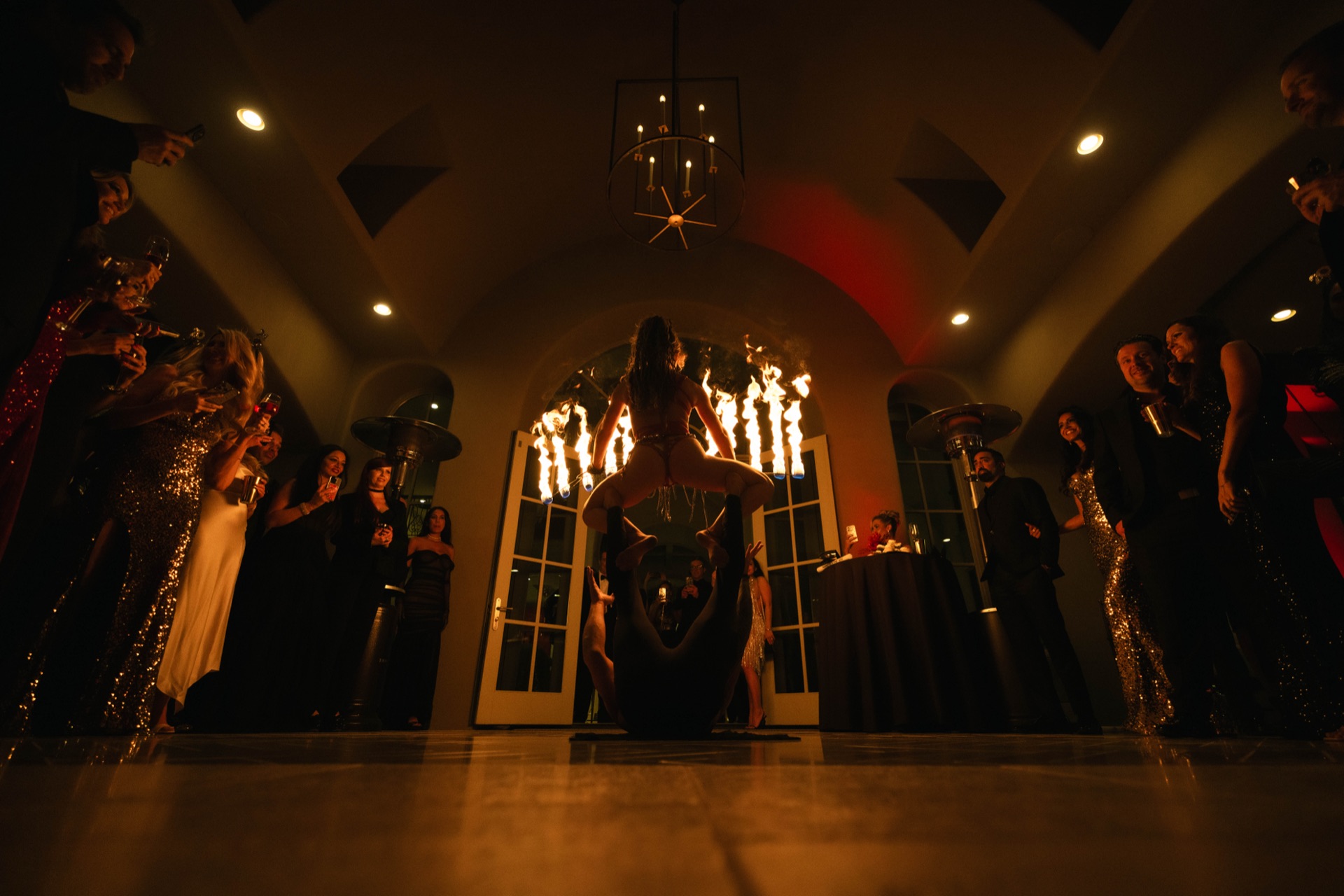
Fire performance. This category includes fire dancing, fire eating, fire breathing, and traditional forms like the Samoan Fire-Knife dance. Fire acts work best outdoors or in venues with high ceilings and written approval for open flame. They are the most regulated category on this list, covered in detail below.
Aerial arts. Silks, lyra (aerial hoop), straps, and hammock. Aerialists perform suspended from a certified rigging point, so the venue itself becomes part of the act. Ceiling height and structural load capacity decide whether this is possible before any artistic conversation starts.
Stilt walkers. High-visibility, roaming entertainment that works cocktail hours and entrances. Requirements are lighter: level flooring, doorway clearance around 9 to 10 feet, and a spotter for crowded rooms.
LED and glow acts. LED poi, hoops, staffs, and programmable pixel props. These deliver much of the visual energy of fire with almost none of the regulatory overhead, which makes them the standard substitute when a venue declines open flame.
Character and specialty performers. Living statues, contortionists, jugglers, themed characters, and ambient performers built around your event concept. Requirements vary by act, so ask each performer what they need rather than assuming.
If you want to compare available acts side by side, browse entertainment vendors on Soivena and filter by category and location.
Safety and Insurance: The Non-Negotiables
Three documents separate a bookable act from a liability problem.
Certificate of insurance (COI). Every professional specialty performer carries general liability coverage and can produce a COI naming your venue as additional insured. Venues commonly require $1 million per occurrence, and many require it before load-in. A performer who hesitates when you ask for a COI is telling you something.
Fire permits and jurisdiction approval. Open flame before an audience is regulated at the local level. The governing standard in the United States is NFPA 160, the Standard for the Use of Flame Effects Before an Audience, and most city and county fire departments base their permit process on it. Salt Lake City Fire, for example, requires a flame effects permit with a site plan, fuel safety data sheets, proof of $1 million in liability coverage, and an application submitted well ahead of the event. Requirements differ by jurisdiction, so the permit conversation has to happen where your event is, not where the performer is based. A professional fire act handles this filing routinely and will tell you the local lead time up front.
Venue sign-off in writing. Even with a permit, the venue must approve open flame, aerial rigging, or anything that touches their structure or their insurance. Get it in writing before you pay a deposit, not after.
Space and Rigging Requirements
Fire acts need a defined performance area with audience separation, typically a minimum 10 to 15 foot buffer depending on the props, plus a fuel station away from guests and a dedicated safety person with suppression equipment. Outdoors is simplest. Indoors requires ceiling clearance, ventilation, and explicit venue and fire authority approval.
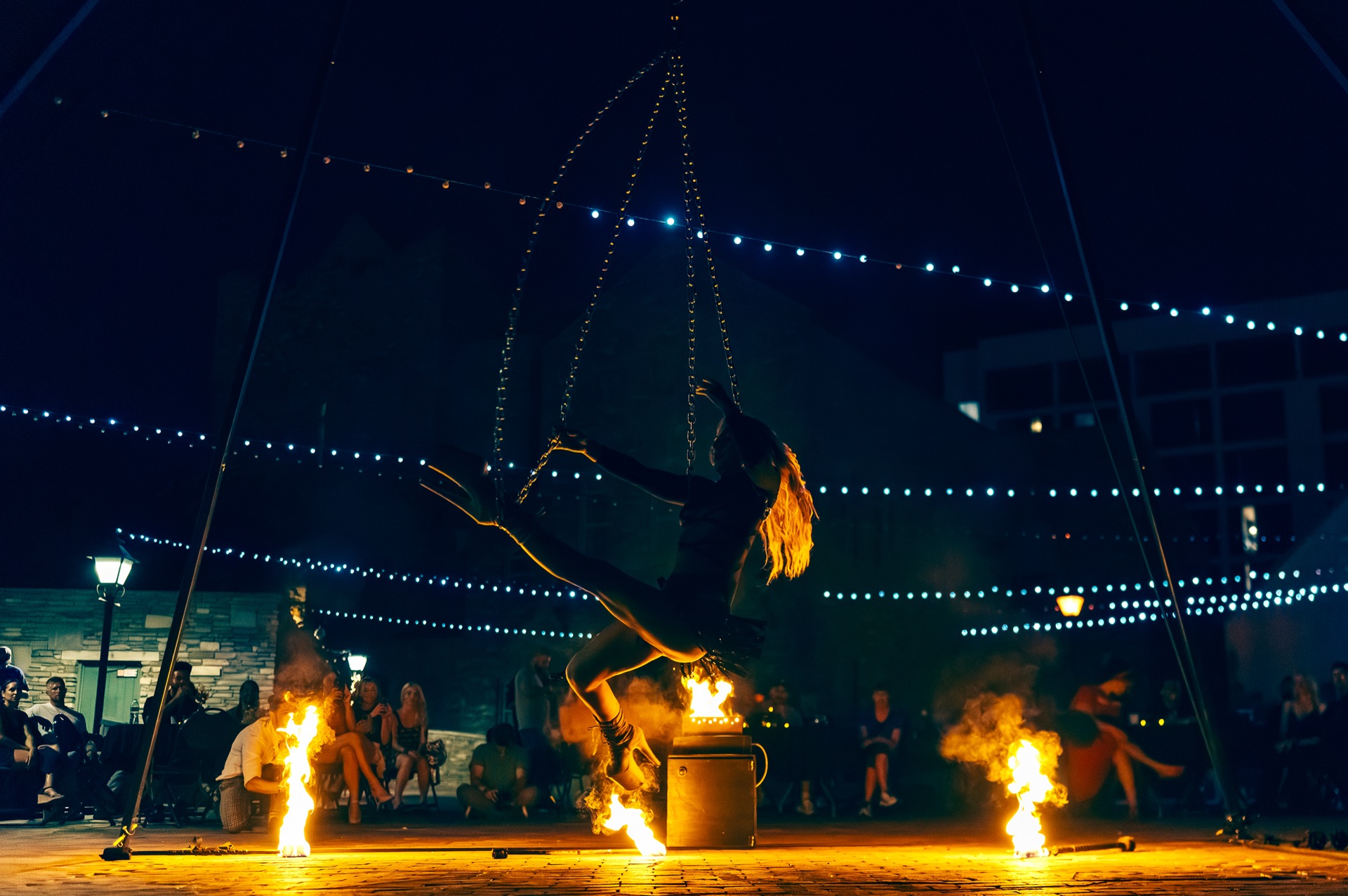
Aerial acts need a rated rigging point. This is the single most misunderstood requirement in specialty entertainment. A ceiling beam that looks sturdy is not a rated point. Practical minimums: roughly 14 to 20 feet of ceiling height depending on the apparatus, a structural point rated for dynamic loads well beyond the performer's body weight, and a clear floor area below. No rated point at your venue? Many aerialists tour with freestanding rigs, which need floor space and load-in access instead.
Everything else is easier: stilt walkers need doorway and ceiling clearance, LED acts need dim lighting to read well, and roaming characters mostly need a green room and a schedule.
How Professionals Price These Acts
Pricing varies by market, act, and production level, so treat these as orientation ranges rather than quotes.
- Solo specialty performer (fire, LED, stilts, characters): roughly $300 to $1,500 per performer for a standard event set or ambient roaming block.
- Aerialists: often $500 to $2,000 plus rigging costs, since certified rigging or a freestanding rig adds real labor and equipment.
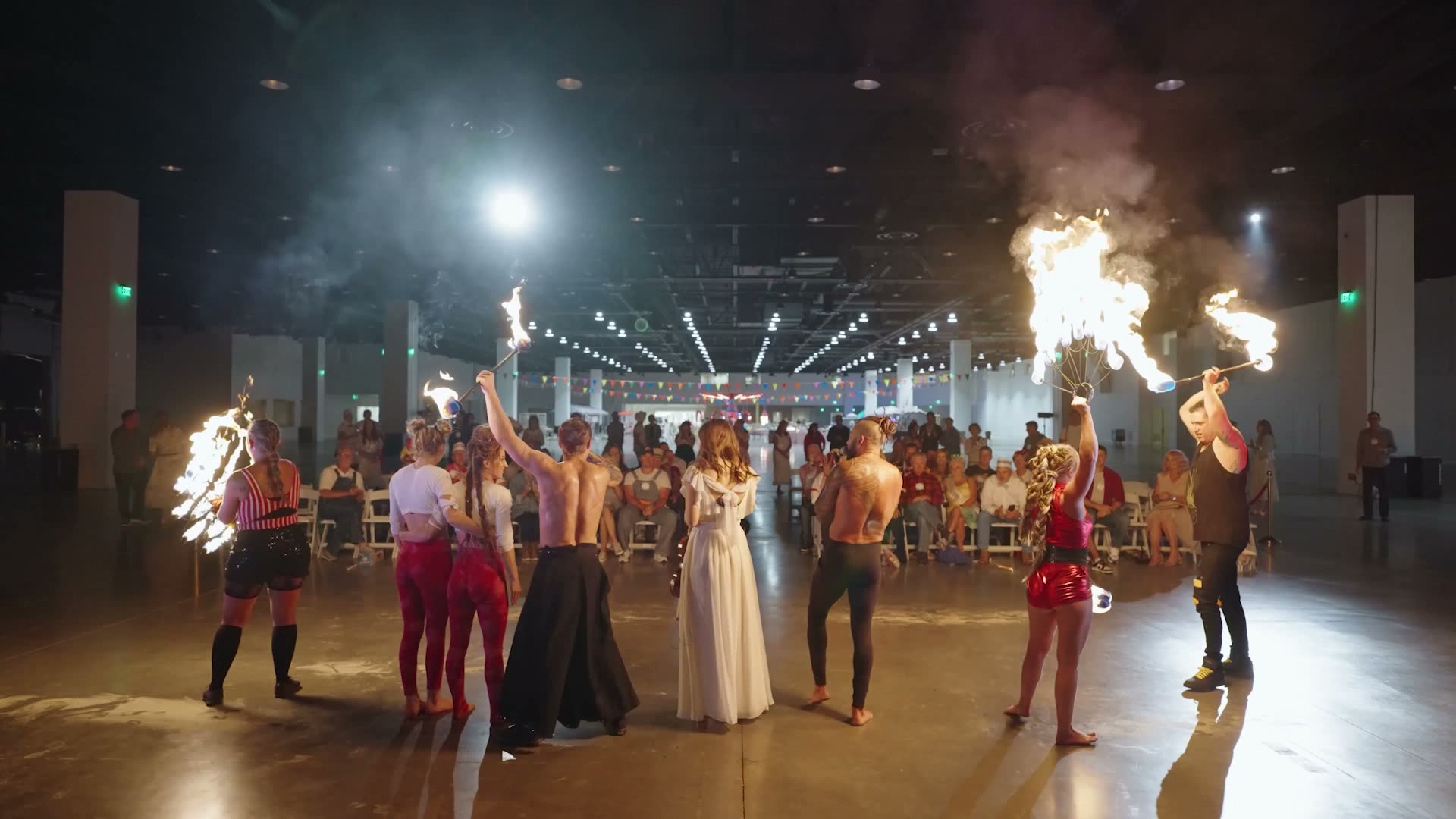
- Multi-performer productions (choreographed fire shows, circus-style revues): commonly $2,000 to $10,000 or more depending on cast size, staging, and travel.
What moves the number: cast size, set length versus roaming time, travel, rigging and permits, custom choreography, and date demand. A holiday Saturday costs more than a Tuesday in February. For a wider look at entertainment budgeting across categories, see our companion guide on how much event entertainment costs, and if you are budgeting the whole event, our pricing page shows how Soivena works for hosts.
Red Flags vs. Marks of a Professional
Red flags:
- No COI, or vague answers about insurance
- "We don't need a permit" for open flame at a public event
- No safety person included in a fire quote
- An aerialist willing to hang from an unrated point
- No written contract, or pressure to pay in full up front in cash
Marks of a professional:
- COI offered before you ask, with additional insured named
- Knows the local fire authority process and builds permit lead time into the timeline
- Asks you detailed venue questions early: surfaces, ceiling heights, power, load-in
- Carries a technical rider that spells out space, safety, and staffing requirements
- References from venues, not just from party guests
For a fuller vetting checklist that applies to any vendor category, read our guide on questions to ask before booking an event vendor.
Planning Timeline
- 8 to 12 weeks out: Book the act. Confirm the venue allows it in writing. Strong performers book out further for peak season, so earlier is better.
- 4 to 8 weeks out: Performer files fire permits or schedules the rigging inspection. COI goes to the venue.
- 2 to 4 weeks out: Final site walk or venue call. Confirm performance area, power, timeline, and wet-weather plan for outdoor fire.
- Event week: Reconfirm load-in time, safety briefing, and the run of show. A professional will initiate this without being chased.
Specialty entertainment rewards hosts who start early and hire people who treat safety as part of the craft. Find them, verify the paperwork, and the rest of your job is enjoying the reaction in the room.
Common questions
Do fire performers need a permit?
Usually, yes. Open flame before an audience is regulated by the local fire authority, typically based on NFPA 160. Professional fire performers handle the permit filing themselves and know the local lead times, which often run two to four weeks.
How much does it cost to hire a fire performer or aerialist?
Solo specialty performers generally run $300 to $1,500 per event. Aerialists often range from $500 to $2,000 plus rigging costs. Full multi-performer productions start around $2,000 and scale with cast size, staging, and travel.
Can aerialists perform at a venue without rigging points?
Often, yes. Many professional aerialists travel with freestanding rigs that require floor space and load-in access instead of a ceiling point. Ceiling-mounted rigging requires a structurally rated point verified by a certified rigger, never an ordinary beam.
What insurance should a specialty performer have?
General liability coverage, commonly $1 million per occurrence, documented by a certificate of insurance (COI) that names your venue as additional insured. Ask for the COI before signing, and treat any hesitation as a red flag.